Ternus's Duo Moment: What Apple's $1,999 Bet Can and Cannot Prove
1. The Event
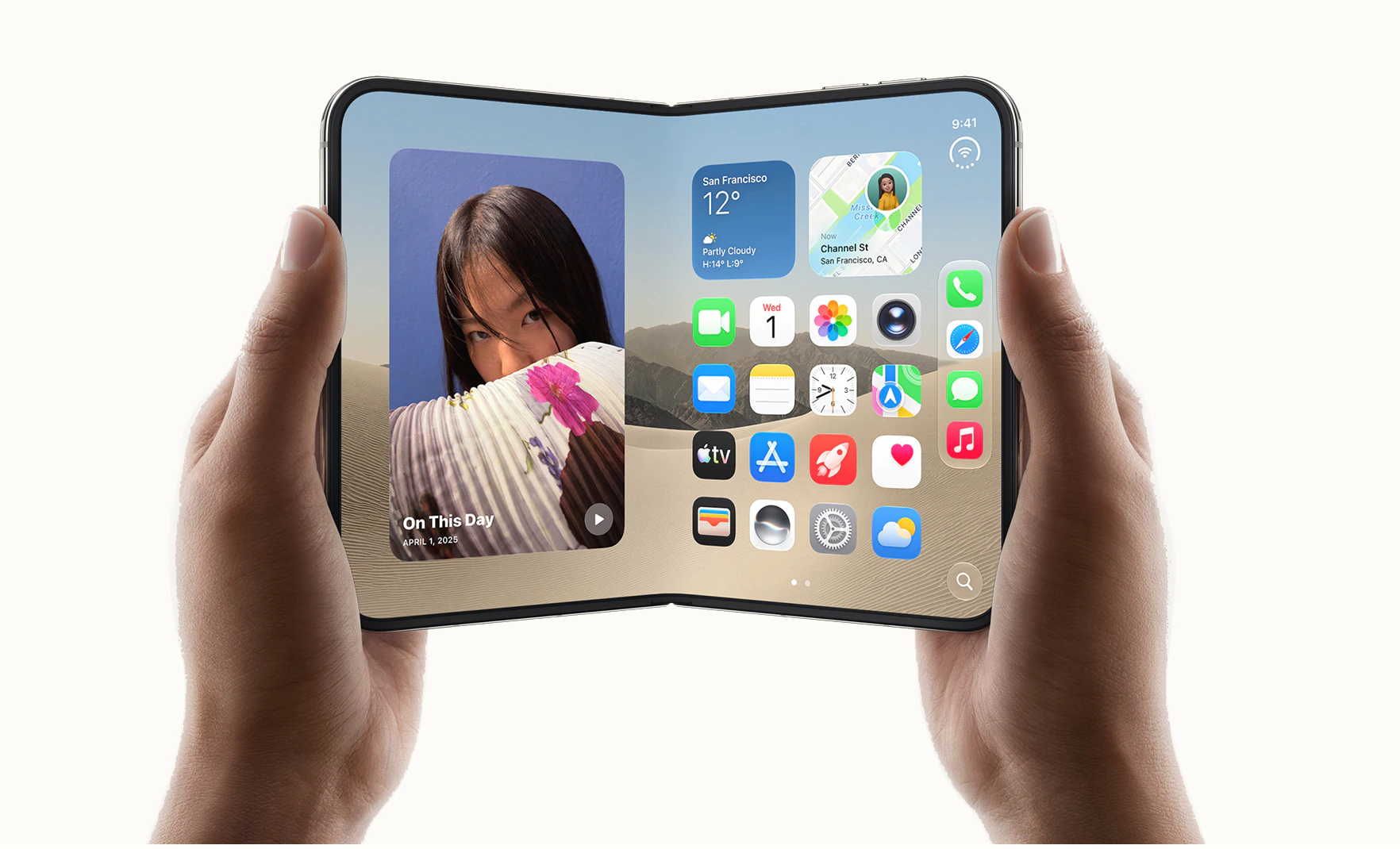
- Apple held its September product launch on September 9, 2026, introducing its first foldable smartphone, the iPhone Duo, alongside the iPhone 18 Pro and Pro Max, new Apple Watch models, and updated AirPods.
- The iPhone Duo starts at $1,999. It features a larger foldable internal display that allows users to run two applications simultaneously. Apple also highlighted an internal display crease that is effectively invisible when the device is unfolded.
- Apple raised the prices of the iPhone 18 Pro and Pro Max by $100, bringing their starting prices to $1,199 and $1,299, respectively. The standard iPhone 18 and second-generation iPhone Air were not launched at the event and are expected to arrive next year. The Pro and Pro Max will become available in September, while the Duo is scheduled for release in October.
- On the AI side, Apple emphasized the on-device AI capabilities of its upgraded A20 Pro chip, together with improvements in performance and thermal efficiency.
- The event was also the first major Apple product launch led by John Ternus after succeeding Tim Cook as CEO. Ternus had previously led Apple's hardware engineering organization and the team responsible for developing the foldable iPhone.
2. Market Reaction
Apple shares saw a muted immediate reaction to the launch. The stock price was little changed after the event, with a roughly 0.28% decline reported by the WSJ.
The reaction across Apple's Asian supply chain was somewhat weaker. Several Chinese and Hong Kong suppliers declined approximately 1–4%, while Samsung Electronics fell as much as 2.2%.
Bloomberg Intelligence took a relatively constructive view of the Duo. Following the launch, BI raised its first-year forecast to approximately 14 million units, compared with its previous 10–14 million scenario. At a $1,999 starting price, BI estimates the device could generate approximately $28 billion in first-year sales, with the forecast units representing around 5.8% of projected FY27 iPhone shipments.
Analyst views were nevertheless mixed.
eToro identified the lack of major AI announcements as a key disappointment and questioned Apple's ability to persuade consumers beyond its most loyal customers to pay the Duo's premium price. KeyBanc argued that price increases may not fully offset gross-margin pressure and could reduce unit volumes and, eventually, user and Services growth.
Bloomberg ANR data also shows considerable dispersion in analyst expectations. While 58.2% of analysts maintain Buy ratings, the consensus price target of $330.54, compared with a share price of approximately $315.34, implies only around 4.8% upside. Individual targets range from around $250 at the bearish end to approximately $400 at the bullish end.
3. Personal Views
Thesis 1 — The Duo can support higher ASPs, but its product differentiation may not be sufficient to support bullish volume expectations at $1,999
Statistics
- 14 million Duo units and approximately $28 billion in sales forecast in the first 12 months; 5.8% of FY27 iPhone shipments.
- 20.3 million foldables shipped in 2025; 33.8% were priced above $1,600, equivalent to approximately 6.9 million units.
- 15% decline in global foldable shipments in the first half of 2026.
- 12 million Pro and Pro Max migrations; 11–13% revenue growth with flat shipments in the August 13 scenario.
- 67% and 82% higher spending per migrating buyer, respectively, versus prior Pro Max and Pro prices.
- $100 across all models: units fall 6%, revenue rises 3–5%. Premium models only: units fall 3%, revenue rises 6–8%.
- 400–600 basis points of potential gross-margin pressure over 12 months without iPhone price increases.
Rationale
I do not question Apple's ability to charge premium prices. Its brand strength, ecosystem stickiness, and relatively low price sensitivity among premium users support a credible commercial case at $1,999. BI assumes early buyers replace foldables every 2–3 years, versus the 4–5-year global iPhone average; that potential recurring-revenue benefit remains an assumption. My concern is instead about the distinction between pricing power and scalable demand.
The Duo improves the execution of the foldable form factor. Its near-invisible crease, hardware-software integration, and multitasking experience are meaningful improvements. However, the core use cases demonstrated at launch—a larger internal display, running two applications simultaneously, and greater screen space in a pocketable device—are already familiar within the foldable category. Therefore, the Duo is less a category-changing product than a refinement of an existing form factor. This does not mean that consumers will not buy the product. Rather, it means that a meaningful portion of the willingness to pay $1,999 may continue to depend on Apple's brand equity and ecosystem rather than on product differentiation alone.
This distinction becomes particularly important when assessing the 14 million-unit forecast. Apple would need to generate first-year Duo demand equivalent to roughly 70% of the entire global foldable market's 2025 unit volume, even though the category contracted in the first half of 2026.
I agree with the bullish argument that Apple has a large pool of premium customers with relatively low price elasticity. However, low price elasticity does not imply an unlimited premium-user pool. The fact that a core group of Pro users is willing to pay $1,999 does not necessarily mean that the group is large enough to sustain 14 million Duo sales in the first year.
BI's August 13 scenario reinforces this concern. It assumes 260 million total iPhone shipments and $50 Pro/Pro Max price increases; it is distinct from the September 10 update, which assumes roughly 241 million shipments and confirms $100 increases. (It is worth noting that the 67%/82% migration uplifts compare a roughly $2,000 foldable with earlier $1,199/$1,099 prices, not the newly announced $1,299/$1,199 prices.) If approximately 12 million Duo units are effectively migrated from Pro and Pro Max customers, then much of the modeled economic benefit comes from monetizing existing users more intensively rather than materially expanding the installed base. This explains how iPhone revenue can rise 11–13% despite flat shipments: the growth comes primarily through mix and ASP rather than unit expansion.
That is still economically valuable. However, it is a different growth story from a genuine product supercycle. A mix-driven growth cycle is more dependent on Apple's ability to repeatedly extract higher spending from its existing premium customer base, while a cycle that brings in net new users would broaden the ecosystem and create a larger base for future Services monetization.
There is also a second limitation to interpreting higher ASP as pure upside. Current iPhone price increases are occurring while memory costs are rising sharply. With analysts estimating a potential 400–600 bps gross-margin hit without price action, some of Apple's incremental pricing power may simply be used to preserve existing margins rather than create additional profitability.
Therefore, my concern is that the market may be extrapolating Apple's demonstrated ability to monetize loyal premium users into a stronger assumption about the scalability of underlying unit demand than the product itself currently justifies.
Thesis 2 — Apple's AI positioning remains ahead of its demonstrated AI product experience
The Facts
- No major new AI updates at the September launch.
- A20 Pro: improved on-device AI processing, performance and heat dissipation.
- Google model licensing supports Apple's strategy of limiting AI infrastructure spending.
- 31.5 times forward earnings, versus 26.5 times a year earlier.
Rationale
Apple continues to position the iPhone as a central interface through which users will access AI. In his first product launch as CEO, John Ternus positioned the iPhone as the “intelligent personal hub” and emphasized some of the existing AI features introduced at WWDC26.
This positioning is credible because the company possesses several structural advantages that could allow it to create economic value without directly winning the model race: control of the device, operating system, distribution, customer relationship, and one of the world's largest premium consumer installed bases. There is therefore a credible bull case in which Apple relies on companies such as Google to bear much of the CapEx of developing frontier models, while Apple captures value by becoming the interface through which consumers access those models.
However, owning the device does not by itself equate to a preferable AI experience. The September event shows this gap: WSJ highlighted the A20 Pro's on-device AI capabilities, while eToro identified the lack of major new AI updates as its main disappointment. In my view, Apple is demonstrating more AI capacity than AI utility.
This is an important distinction. More capable on-device hardware creates the infrastructure for future applications, but infrastructure alone does not establish competitive differentiation. For the “AI hub” thesis to become economically meaningful, Apple still needs to demonstrate at least two things. First, it needs a differentiated consumer experience: Siri and Apple Intelligence must offer use cases that are either meaningfully better than competing assistants or uniquely valuable because of Apple's ecosystem integration. Second, it needs evidence of behavioral impact: AI should measurably improve engagement, device replacement cycles, ecosystem retention, or hardware demand rather than simply becoming another bundled feature. Until those links become visible, I view the AI-hub thesis as more aspirational than demonstrated.
The valuation makes this distinction more relevant. In its June 29 analysis, BI cited a forward P/E of 31.5x versus 26.5x a year earlier and attributed the re-rating to low capital outlays and Google model licensing. Therefore, the investment question is no longer simply whether Apple can eventually build a viable AI strategy. Some of the benefit from that strategy may already be reflected in the multiple.
At a valuation above 30x forward earnings, continued narrative progress without corresponding product and monetization evidence creates a less attractive risk-reward profile. This is why I view the lack of new AI capability at the September event as more meaningful than a normal absence of software announcements: Apple is increasingly receiving valuation credit for an AI strategy whose consumer economics remain difficult to observe.
Thesis 3 — The Duo launch says more about the Ternus succession than it proves about a new innovation cycle
Statistics
- The week before launch: Ternus assumed the CEO role.
- Hardware chief since 2021: Ternus led the team that developed the Duo.
- Developed under Cook: the Duo predates Ternus's CEO tenure.
- First product rollout as CEO: the leadership transition coincided with the foldable launch.
Rationale
I would distinguish between Ternus's contribution to the Duo as Apple's former hardware leader and what the Duo tells investors about his ability to change Apple's innovation trajectory as CEO.
The first point is clearly legitimate. Ternus led hardware engineering and the team responsible for the foldable, meaning the Duo is relevant evidence of his technical leadership and ability to execute a complex hardware program.
The second claim is much harder to establish. WSJ reports that the Duo was developed during Cook's tenure, with Ternus leading the hardware team. Its development therefore predates Ternus's appointment as CEO. It cannot yet provide meaningful evidence about decisions made under his CEO-level control, such as portfolio priorities, organizational structure, R&D allocation, acquisitions, or long-term capital deployment. This is why I think the timing of the event is important. Apple was able to combine three powerful messages in a single launch: a new CEO, a new iPhone form factor, and a renewed innovation narrative.
WSJ largely adopts this framing, describing the Duo as a symbol of hopes that Ternus can restart Apple's innovation engine. But the same reporting also provides a reason to treat that interpretation cautiously: Apple deliberately aligned his succession with a product that was already well advanced. I therefore view the event as evidence of effective succession choreography rather than proof that Apple's underlying innovation process has already changed.
Ternus may ultimately introduce a faster or more ambitious innovation cycle, but the evidence should come from decisions and products whose development genuinely belongs to his tenure. The Duo can reasonably be viewed as evidence of Ternus the hardware executive. It is not yet strong evidence of Ternus the CEO.
4. Conclusion
My overall reaction to the September event is neutral, with risks to consensus estimates skewed to the downside.
The Duo strengthens Apple's premiumization opportunity and could materially raise iPhone ASP even without meaningful unit growth. Apple's brand equity and premium-user loyalty make the product commercially credible despite its $1,999 starting price.
However, I am less convinced that the Duo's current product differentiation is sufficient to support the more bullish volume assumptions. BI's own forecasts demonstrate that a substantial part of the economic upside comes from existing Pro and Pro Max users trading upward, making the opportunity predominantly a mix and monetization story rather than an installed-base expansion story.
At the same time, Apple has yet to provide a sufficiently differentiated AI experience to validate its broader AI positioning, while the Duo launch should not yet be treated as evidence of a Ternus-led innovation revival.
These concerns suggest that current expectations leave limited room for execution disappointment, particularly given the stock's valuation and modest upside to the Street's consensus price target.
Catalysts to watch
- Duo preorder and sell-through data.
- The proportion of buyers migrating from existing Pro models.
- Gross-margin performance following the price increases.
- Tangible improvements in Apple's AI experience.
5. Referenced Sources
- Bloomberg Intelligence — Apple Equity Research / Outlook, Anurag Rana and Josh Christensen, September 10, 2026.
- Bloomberg First Word — “Apple Supplier Stocks Decline in Asia After Foldable Launch,” Kurt Schussler and Joe Flynn, September 10, 2026.
- The Wall Street Journal — “Apple Debuts New Foldable iPhone Duo, New CEO and New (Higher) Prices,” Rolfe Winkler, September 9, 2026.
- Bloomberg ANR — Apple Analyst Recommendations, September 10, 2026.